Introduction
You tried your best.
Your doctor prescribed a statin to lower your cholesterol. You took it exactly as directed. But within weeks—sometimes days—something felt wrong.
Your thighs ached. Your shoulders felt stiff and heavy. Walking up stairs became an effort. You felt tired in a way that sleep could not fix. Maybe your thinking felt slower. Maybe your sugar numbers crept up.
You told your doctor. She switched you to a different statin. Same pain. A lower dose. Still the pain. You tried three different statins, and your body said no to all of them.
Now you are stuck. Your cholesterol is high. Your doctor says you need treatment. But the treatment makes you feel worse than the disease.
If this sounds familiar, I want you to know something important: your body is not failing you. It is sending you a message. And understanding that message may be the key to protecting your heart—without a drug you cannot tolerate.
Why Do Statins Cause So Much Muscle Pain?
Statin side effects, especially muscle pain and weakness, are not rare. Depending on the study, anywhere from 10 to 29 percent of patients report muscle symptoms. For some, the pain is mild. For others, it is disabling.
The most well-documented reason involves a molecule called coenzyme Q10 (CoQ10) . Your body produces CoQ10 through the same biochemical pathway that statins block to lower cholesterol. CoQ10 is essential for your mitochondria—the tiny power plants inside every cell that produce energy. Your muscle cells, especially your heart and large skeletal muscles, have enormous energy demands. They need CoQ10 to function.
When a statin reduces your body’s production of CoQ10, your muscle cells struggle. They cannot generate enough energy. Pain, weakness, and fatigue are the result.
But CoQ10 is not the whole story. Statins also reduce other important molecules that your cells need, including dolichols (which help maintain cell membranes) and selenoproteins (which protect cells from oxidative damage). If you were already marginally low in any of these—due to diet, age, or genetics—a statin can push you over the threshold into symptoms.
In plain words: statins do not just lower cholesterol. They partially block a chain of processes your body uses every day. For some people, the body can handle this. For others, it cannot.
What Your Muscle Pain Is Trying to Tell You
Most doctors see statin side effects as an obstacle. Try another statin. Try a lower dose. Try every-other-day dosing. If nothing works, try ezetimibe or an expensive PCSK9 inhibitor.
I see it differently.
Your body’s rejection of statins is not a dead end. It is information. It tells you that your cellular machinery is already under stress—likely from years of nutrient deficiencies, processed food consumption, and oxidative damage.
If your CoQ10 levels were already low because your diet lacks the nutrients needed to produce it, a statin pushes you over the cliff. If your vitamin D was already marginal, statin use unmasks the deficiency. If your mitochondria were already struggling, the statin becomes the final blow.
The muscle pain is not just a side effect. It is a warning light on your dashboard. It tells you that your cells need support—support that statins were never designed to give.
And here is the crucial point: the same nutrient deficiencies that make you statin-intolerant may also be contributing to your high cholesterol in the first place.
Cholesterol Is Not a Random Invader
To understand what to do instead of statins, you have to understand why your cholesterol is high.
Your liver does not produce cholesterol to harm you. It produces cholesterol because your body needs it. Cholesterol is used to build cell membranes, to make hormones like testosterone and estrogen, to produce vitamin D, and to repair damaged tissue. It is so essential that every cell in your body can make its own cholesterol if needed.
When cholesterol levels rise, it is often because your body is responding to something—chronic inflammation, tissue damage, metabolic stress, or nutrient deficiency. Lowering cholesterol with a statin without addressing the reason it is elevated is like turning off a fire alarm while the fire still burns.
The statin lowers the alarm. It does not put out the fire.
What to Do If You Cannot Tolerate Statins
If your body has rejected statins, you are not out of options. You have a different path—one that works with your body rather than against it.
Step 1: Give Your Cells What the Statin Depleted
Whether or not you ever take a statin again, your body may need help restoring the nutrients that were affected:
- Coenzyme Q10 (Ubiquinol): The active form at 100–200 mg daily can help restore energy production in your muscles. Food sources include heart, liver, and fatty fish, but therapeutic doses usually require supplementation.
- Magnesium: Your muscles need magnesium to relax and produce energy. Magnesium glycinate at 200–400 mg at bedtime is well absorbed and does not cause digestive upset.
- Vitamin D3: Many people with statin-related muscle pain are vitamin D deficient. Have your levels checked. If low, supplement to bring your levels into the normal range.
Step 2: Lower Cholesterol by Fixing What Drives It Up
Instead of blocking cholesterol production, address what is telling your liver to produce more:
- Reduce sugar and refined flour. Excess carbohydrates, especially fructose, are converted by the liver into triglycerides. These triglycerides are packaged into VLDL particles, which eventually become LDL. Cutting sugar and refined starch reduces this drive at its source.
- Eat healthy fats. Natural fats from eggs, dairy, nuts, olive oil, and fatty fish do not drive cholesterol production the way refined carbohydrates do. Your body needs fat to function.
- Provide the nutrients your liver needs to regulate cholesterol properly. B vitamins, magnesium, choline (rich in eggs), and omega-3 fatty acids all support normal liver function.
Step 3: Strengthen Your Arteries So They Need Less Repair
This is the step that almost no one talks about. Your arteries are made of collagen. Collagen requires vitamin C, lysine, and proline to stay strong. When these nutrients are deficient, your artery walls weaken. Tiny cracks form. Your body sends Lp(a) and cholesterol to patch the damage.
When you provide vitamin C, lysine, and proline, your artery walls strengthen. The cracks heal. The need for cholesterol patches diminishes. Your cholesterol levels may fall not because you blocked something, but because your body no longer needs to produce as much.
This is the approach I used on myself. In 2010, I had two coronary artery blockages above 80%. I was told I needed bypass surgery. Instead, I addressed the nutrient deficiencies that had weakened my arteries. Today, at 75, I take no heart medications. My heart works well.
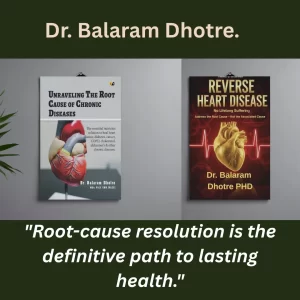
My book Reverse Heart Disease: No Lifelong Suffering explains the full protocol.
A Few Words of Caution
Do not stop your statin suddenly without talking to your doctor. If you are experiencing muscle pain, speak with your physician. Ask about checking your CoQ10 and vitamin D levels. Ask about trying a lower dose, a different statin, or an alternative medication like ezetimibe while you work on addressing the root causes.
Statin side effects are real. They are not “all in your head.” But they are not the end of the road either. They are a sign that your body needs more support than a prescription alone can give.
You Have a Choice
You tried the statin. It did not work for you. That is not your fault.
You now have a choice. You can continue cycling through different drugs, hoping to find one your body will tolerate. Or you can ask a deeper question: Why is my cholesterol high? What is my body trying to fix? What nutrients am I missing?
The first path manages numbers. The second path pursues health.
Your body’s rejection of statins was not a failure. It was a message. Listen to it.
Written by Dr. Balaram Dhotre, PhD — Medicinal Chemistry (CDRI, Lucknow), with research experience across several pharmaceutical companies in India. His work focuses on explaining the nutrients the body requires, how the body uses them to function optimally, and how their deficiencies are related to chronic diseases. He is the Founder of Lypro-C and author of Unraveling The Root Cause of Chronic Diseases and Reverse Heart Disease: No Lifelong Suffering.
[Click here to get your copy of:::::Reverse Heart Disease: No Lifelong Suffering on Amazon]
——————————————————————————————————————————-
My Books