Introduction
If you have been diagnosed with heart disease, you have almost certainly been told to eat a plant‑based diet. The reasoning sounds logical: animal foods contain saturated fat and cholesterol. Saturated fat raises cholesterol. Cholesterol clogs arteries. Therefore, eliminate animal foods, avoid all oils, and your arteries will clear.
This advice has become so widespread that questioning it can feel like questioning gravity. Entire books, documentaries, and medical programmes are built on this single premise. Patients who follow it strictly are praised for their discipline. Those who stray are made to feel they have failed themselves.
But I want to ask a question that is almost never asked: If the plant‑based approach is truly complete, why do so many compliant patients still see their disease progress?
I have watched friends follow this advice to the letter—eliminating every drop of oil, every gram of animal protein—only to end up with more stents, more medications, and more fear. My friend Mahesh eliminated everything he was told to eliminate. He still ended up with four stents and the threat of amputation.
Something is missing from the plant‑based conversation. Something that is rarely discussed in the books and documentaries that promote it. That missing element is the key to true artery repair.
What Plant‑Based Diets Get Right
Before I explain what is missing, I want to acknowledge what plant‑based diets get right. This is important because the goal is not to dismiss the value of plants but to complete the picture.
Plants are rich in many protective nutrients. Fruits and vegetables supply vitamin C, polyphenols, flavonoids, and other antioxidants that help protect the endothelial lining from oxidative damage. Fibre from whole grains and legumes supports healthy digestion and cholesterol metabolism. A diet built around whole plant foods is, without question, far healthier than the standard Western diet of processed foods, sugar, and refined flour.
Eliminating processed oils reduces oxidative stress. Heated and chemically extracted oils can introduce harmful compounds that injure the endothelium—the delicate inner lining of your blood vessels. Removing these oils from the diet is a sound protective measure.
Some people do experience initial improvements. When a person switches from a diet of fried foods, sugar, and processed meat to a whole‑food, plant‑based diet, several markers often improve: cholesterol drops, blood pressure may normalize, and some weight is lost. These improvements are real, and they are encouraging.
But here is the critical question: are these improvements the result of true arterial repair, or are they simply the result of removing ongoing injury?
There is a world of difference between the two.
Protection Is Not Repair
Imagine a house with a cracked foundation. One approach is to stop the heavy trucks that drive past the house and shake the ground. That reduces further vibration damage. It is a good and necessary step. But it does nothing to fill the cracks that already exist in the foundation. The house remains structurally weak. The next tremor—even a small one—can cause the cracks to widen.
This is the fundamental limitation of a diet that focuses only on what you remove. It protects the artery from further injury. It does not actively provide the building materials needed to repair the structural damage that has already occurred.
Your arteries are not pipes that passively accumulate gunk. They are living, dynamic tissues made primarily of collagen—a protein that is constantly being broken down and rebuilt. The artery wall is under renovation every single day. For that renovation to succeed, it requires specific raw materials.
If those raw materials are not supplied, the renovation stalls—no matter how pure your diet is on paper.
The Three Nutrients Your Arteries Demand
The artery wall is held together by collagen. Collagen synthesis depends absolutely on three nutrients:
Vitamin C
Vitamin C is the master builder. Without it, the enzymes that knit amino acids into strong collagen strands cannot function. When vitamin C is deficient over a long period, the collagen matrix becomes weak and brittle. Microscopic cracks develop in the endothelial lining. The body senses these cracks as injuries and rushes to patch them with lipoprotein(a)—a sticky cholesterol‑based emergency band‑aid. This is how plaque begins.
A diet rich in fruits and vegetables can supply a baseline of vitamin C. But therapeutic reversal—actually repairing years of accumulated arterial weakness—often requires amounts far beyond what even an excellent diet can provide. The RDA for vitamin C prevents scurvy. It does not reverse structural damage to the artery wall.
Lysine
Lysine is an essential amino acid. The body cannot manufacture it. It must come from food. In collagen, lysine forms the cross‑links that give the protein its remarkable tensile strength. Without sufficient lysine, the collagen scaffolding remains loose and fragile.
Lysine has a second, crucial function: it can occupy the binding sites on the artery wall where lipoprotein(a) tries to attach. By occupying those sites, lysine acts as a natural shield, preventing new plaque from forming while the artery repairs itself.
Proline
Proline is the second major structural amino acid in collagen. Together with lysine, it makes up a large proportion of the collagen molecule. During periods of active tissue repair—exactly what heart disease reversal demands—the body’s need for proline rises significantly.
Where Plant‑Based Diets May Fall Short
Here is the uncomfortable truth that is rarely discussed in plant‑based circles: the richest, most concentrated sources of lysine and proline are animal foods.
Eggs, dairy, fish, and meat supply these amino acids in the quantities and proportions that match the body’s need for collagen synthesis. A single egg or a serving of paneer delivers a substantial dose of both lysine and proline in a highly absorbable form.
Plant foods do contain lysine and proline. Legumes, quinoa, nuts, and seeds are plant sources. But the concentration is often lower, and achieving therapeutic levels requires careful planning, larger volumes of food, and consistent variety. For a person who is already frail, elderly, or has a reduced appetite, this can be a genuine challenge.
A strict plant‑based, oil‑free diet that eliminates all animal foods may, without careful planning, inadvertently create a deficit of the very amino acids the arteries need to repair themselves. The person following such a diet may be doing everything they were told to do—and yet their arteries remain weak because the structural building blocks are undersupplied.
This is not an argument against plants. It is an argument against nutritional deficiency. If a plant‑based diet is carefully constructed to supply therapeutic levels of all essential nutrients—including through supplementation when necessary—it can support healing. But the blanket assumption that simply removing animal foods and oils will reverse heart disease is scientifically incomplete.
The Synergy Problem: Why Single Nutrients Are Not Enough
Even if a diet supplies adequate vitamin C, lysine, and proline, the repair process can still stall if the supporting team of co‑factors is missing.
Your body never uses a single nutrient in isolation. Collagen synthesis requires:
- Magnesium for energy production to power the repair enzymes.
- Zinc for cell division and new tissue formation.
- Copper to cross‑link collagen fibres, giving them strength and flexibility.
- B‑complex vitamins as coenzymes in every energy‑transfer step.
A whole‑food, plant‑based diet is generally rich in many of these co‑factors. But if the diet is also low in calories, or if the person has digestive issues that impair absorption, deficiencies can still develop.
This is the synergy principle I explain in detail in my book Unraveling the Root Cause of Chronic Diseases. Every repair process in the body requires a full team of nutrients working together. A deficiency in even one team member can halt the entire process.
What the Evidence Actually Shows
The plant‑based movement often cites studies showing that populations consuming vegetarian or vegan diets have lower rates of heart disease. This is true, and it is valuable data. But these studies compare plant‑based eaters to people eating the standard Western diet—high in processed foods, sugar, and industrial seed oils. Almost any whole‑food diet outperforms the standard Western diet.
What these studies do not show is whether a strict plant‑only diet outperforms a nutrient‑dense diet that includes animal foods specifically chosen to support collagen synthesis and arterial repair. That comparison has not been adequately studied.
There is, however, a substantial body of biochemical evidence showing what arteries need to repair themselves. The collagen synthesis pathway is well understood. The role of vitamin C as a co‑factor for prolyl hydroxylase and lysyl hydroxylase—the enzymes that stabilise collagen—is established biochemistry. The role of lysine in collagen cross‑linking and in inhibiting lipoprotein(a) binding is documented in peer‑reviewed literature.
The question is not whether these nutrients are important. The question is whether a diet that restricts the most concentrated sources of these nutrients can supply enough of them to reverse established disease. For many patients, the honest answer is that it may not.
My Own Experience
I say none of this from a theoretical distance. I lived it.
In 2010, I was diagnosed with two coronary artery blockages above 80%. The standard advice would have been to adopt a strict plant‑based, oil‑free diet. I chose a different path. As a researcher trained in drug design, I asked a deeper question: What are my arteries made of, and what do they need to repair?
The answer led me to vitamin C, lysine, and proline—the building blocks of collagen. I formulated a supplement to provide these nutrients in therapeutic amounts. I also ate a diet that included both plant and animal foods—eggs, dairy, and occasionally fish—chosen specifically to supply the full range of essential nutrients my cells required.
I did not eliminate all oils. I did not obsess over every gram of fat. I focused on what I was providing, not just on what I was avoiding.
Today, at 75, I take no heart medications. My heart functions well. I am not a special case. I am simply someone who addressed the root cause rather than managing symptoms.
A Better Framework: The Essential Nutrient Diet
I do not ask you to choose between plants and animals. I ask you to choose between deficiency and sufficiency.
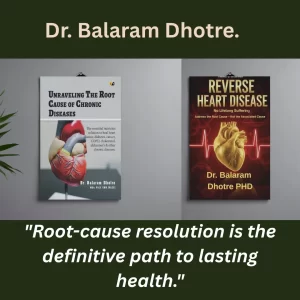
The Essential Nutrient Diet, which I describe fully in Reverse Heart Disease: No Lifelong Suffering, is built on a single question: What do my cells need to function, and am I providing it today?
If you can supply all essential nutrients—vitamin C, lysine, proline, magnesium, zinc, copper, B‑vitamins, and the full team of co‑factors—from a carefully planned plant‑based diet, then that diet can support healing. But if your plant‑based diet is low in lysine and proline, or if it relies on processed vegan substitutes, or if it fails to supply therapeutic levels of vitamin C, then it is not a healing diet. It is a maintenance diet at best, and a deficiency diet at worst.
The better approach is to start with the nutrients, not the ideology. Ask what your arteries need. Then choose the foods—plant and animal alike—that supply those nutrients in adequate amounts.
What You Should Do Now
If you are currently following a plant‑based diet for heart disease, I am not asking you to abandon it. I am asking you to examine it honestly.
- Are you getting enough vitamin C daily—not just the RDA, but therapeutic amounts to support collagen repair?
- Are you consuming enough lysine and proline from legumes, quinoa, nuts, and seeds—or are these amino acids undersupplied in your meals?
- Are you supporting the repair process with adequate magnesium, zinc, copper, and B‑vitamins?
- Is your diet truly nutrient‑dense, or does it include processed vegan foods that provide calories without micronutrients?
If you cannot answer these questions with confidence, your diet may be protecting your arteries but not repairing them. The solution is not to abandon plants. It is to add what is missing—through food or through targeted supplementation.
I developed the Lypro‑C formula precisely for this purpose: to provide vitamin C, lysine, proline, and supporting co‑factors in therapeutic amounts, ensuring that the artery has everything it needs to repair itself, regardless of dietary preference. You can learn more about the complete protocol in my book Reverse Heart Disease: No Lifelong Suffering.
The Bottom Line
Plant‑based diets have value. They are rich in antioxidants and fibre. They reduce the oxidative stress that injures the endothelium. They are a vast improvement over the standard processed‑food diet.
But protection is not repair. Removing sources of injury is not the same as providing the materials to rebuild. Your arteries need vitamin C, lysine, and proline—and they need them in amounts sufficient to reverse years of accumulated structural weakness.
If your current diet supplies these nutrients in adequate therapeutic amounts, continue with confidence. If it does not, then no amount of dietary purity will heal you. You will be protecting a cracked vessel that never receives the cement to fill the cracks.
Stop asking only what to remove from your plate. Start asking what your arteries have been missing. Provide those nutrients, and your body will do the rest.
Written by Dr. Balaram Dhotre, PhD — Medicinal Chemistry (CDRI, Lucknow), with research experience across several pharmaceutical companies in India. His work focuses on explaining the nutrients the body requires, how the body uses them to function optimally, and how their deficiencies are related to chronic diseases. He is the Founder of Lypro-C and author of Unraveling The Root Cause of Chronic Diseases and Reverse Heart Disease: No Lifelong Suffering.
Click here to get your copy of:::::Reverse Heart Disease: No Lifelong Suffering on Amazon
Visit lyproc.com to read more articles and learn about the root‑cause approach to chronic disease reversal.
————————————————————————————————————————–
My Books
Links on Amazon
Unraveling The Root Cause of Chronic Diseases: https://www.amazon.com/dp/935847114X
Reverse Heart Disease: No Lifelong Suffering: https://www.amazon.com/dp/B0G7SB4QCD