

Introduction
Here is a disease you do not hear much about anymore. It is called beriberi. Do you know what causes beriberi?
First, your feet go numb. Then your legs get weak. You cannot walk straight. Your heart starts to fail. And finally, you die.
There are two forms of this disease. Wet beriberi affects the heart. You wake up at night short of breath. Your heart races. Your legs swell up. Dry beriberi affects the nerves. You lose feeling in your hands and feet. You cannot walk properly. You become confused.
In the late 1800s, this disease was killing thousands of people in Asia. Most doctors thought it was caused by a germ or poisoned water.
The Chicken Experiment That Solved the Mystery
Then a Dutch doctor named Christiaan Eijkman went to Java to study it. He noticed something strange. Chickens in the hospital yard were getting sick – with the exact same symptoms as beriberi.
Then, one day, the chickens got better.
Why? Because the cook had changed their food. The chickens had been eating leftover white rice from the patients. When the cook switched to brown rice, the chickens recovered.
Eijkman realised: the outer layer of the rice grain – the part removed to make white rice – contained something essential for life. Without it, your nervous system collapses. With it, your body stays healthy.
Later, scientists isolated that missing something. They called it vitamin B1 (thiamine).
How Your Body Uses Vitamin B1 – The Coenzyme Secret
Now we know exactly why missing vitamin B1 causes so much damage. Vitamin B1 works as a coenzyme. Think of a coenzyme as a helper molecule that your enzymes need to do their job. Without these helpers, your body’s chemical reactions slow down or stop entirely.
Your body cannot store B vitamins. You need to get them from food every single day.
Thiamine (vitamin B1) has a very specific job. It helps your body turn the food you eat into energy. It does this by acting as a cofactor for four major enzyme systems in your cells, especially in your mitochondria – the tiny power plants inside every cell of your body.
Without enough thiamine, your cells cannot produce energy properly. This is why beriberi affects the heart and nerves first. Those are the parts of your body that need the most energy every minute of the day.
The B‑Complex Connection – Why One Vitamin Affects So Many Functions
Here is something most people do not know. Vitamin B1 is not alone. It is part of a family of eight B vitamins, often called the B‑complex. Each one is a coenzyme, and they work together. A lack of one B vitamin can interrupt a whole chain of chemical processes in your body that depend on other B vitamins.
Here is a simple table showing the B‑complex family and what each one does:
B1 – Thiamine: Helps convert carbohydrates into energy; essential for nerves and heart. Found in whole grains, meat, fish, pork, and fortified grains.
B2 – Riboflavin: Helps break down carbohydrates and fats into energy. Found in liver, eggs, dairy, mushrooms, and fortified grains.
B3 – Niacin: Helps break down carbohydrates, fats, and proteins. Found in meat, chicken, fish, peanuts, and potatoes.
B5 – Pantothenic acid: Helps break down fats and carbohydrates; makes cholesterol and neurotransmitters. Found in beef, chicken, organ meats, whole grains, mushrooms, sunflower seeds.
B6 – Pyridoxine: Helps break down glycogen (stored sugar); makes amino acids, neurotransmitters, and hemoglobin. Found in chickpeas, fish, beef, chicken, fortified grains, potatoes, bananas.
B7 – Biotin: Helps digest carbohydrates, make fatty acids, and produce glucose. Found in eggs, nuts, seeds, sweet potatoes.
B9 – Folate: Works with B12 to control homocysteine levels; important for DNA and RNA synthesis. Found in leafy green vegetables, beans, fortified grains.
B12 – Cobalamin: Helps make DNA and fatty acids; essential for nerve health and red blood cells. Found in meat, fish, eggs, dairy, fortified plant milk.
All B vitamins are water‑soluble. That means your body cannot store them. You must replace them every single day through your diet. If you miss any of them for too long, your body will let you know.
From Beriberi to Chronic Disease – The Same Pattern
This pattern – a strange disease, blamed on germs or bad food, eventually traced back to a single missing vitamin – is not just history. It is the same pattern you see in scurvy (missing vitamin C), in pellagra (missing vitamin B3), in rickets (missing vitamin D), and in pernicious anemia (missing vitamin B12).
And here is where my work begins. In my book Unraveling the Root Cause of Chronic Diseases, I explain that modern chronic diseases – heart disease, diabetes, arthritis – follow the same pattern. But today, we are not missing just one vitamin. We are missing a combination of dietary factors that work together. Vitamin C, lysine, proline, and other essential nutrients have all become scarce in our modern food supply. When multiple nutrients are missing at the same time, the damage happens slowly, over decades. That is why we call them “chronic” diseases.
What You Can Do Today?
Beriberi was conquered not by a drug, but by adding back what was missing – vitamin B1. Scurvy was conquered by restoring vitamin C. Pellagra was conquered by restoring niacin. The lesson is simple and powerful: your body knows how to heal. You just have to give it the tools it needs.
If you want to understand how this applies to your heart, your brain, and your long‑term health, read my book Unraveling the Root Cause of Chronic Diseases. I will show you exactly which nutrients are missing from modern diets and how to put them back.
_____————————————————————————————————————————-
My Books
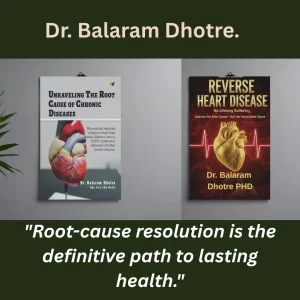
Links on Amazon
Unraveling The Root Cause of Chronic Diseases:
Reverse Heart Disease: No Lifelong Suffering
—————————————————————————————————————————