

Introduction
Here is a disease that once terrorized the American South. It is called pellagra.
In the early 1900s, tens of thousands of people came down with a strange illness. First came a rash on their hands, feet, and neck – skin that cracked and peeled like sunburn. Then came diarrhea that would not stop. Then came confusion, depression, and memory loss. Finally, death.
Doctors called it the “Four D’s”: Dermatitis, Diarrhea, Dementia, and Death.
No one knew the cause. Many believed it was an infection carried by insects or contaminated water.
What Causes Pellagra? The Corn Connection
But one doctor noticed something odd. Pellagra appeared in poor communities that ate mostly corn – especially corn that had been processed with lime (calcium hydroxide) to make masa or hominy. In communities that ate corn without this traditional treatment, pellagra was rampant.
Why? Because untreated corn lacks a key nutrient. And the body cannot make that nutrient from the protein in corn.
It took years of careful observation to figure out that pellagra was not an infection. It was a deficiency disease – caused by the absence of a tiny vitamin.
The Doctor Who Refused to Believe It Was a Germ
In 1914, a young American doctor named Joseph Goldberger was sent by the US government to investigate pellagra. He did not accept the “germ theory” for this disease.
He visited orphanages, prisons, and mental hospitals where pellagra was common. He noticed that nurses and guards never got sick – even though they lived in the same buildings. If it were a germ, everyone would be exposed.
Goldberger did a simple experiment. He took a group of prisoners who had no pellagra and fed them nothing but corn‑based foods with very little meat, milk, or vegetables. Within months, they developed pellagra.
Then he took pellagra patients and added brewer’s yeast (rich in B vitamins) to their diet. They recovered completely.
Goldberger proved that pellagra was not an infection. It was a deficiency of something found in meat, milk, eggs, and fresh vegetables. That something was later identified as vitamin B3 (niacin).
How Your Body Uses Vitamin B3 – The NAD Secret
Now we know why missing vitamin B3 causes so much damage. Niacin is essential for making two crucial coenzymes: NAD and NADP. These molecules are involved in over 400 chemical reactions in your body.
Without NAD, your cells cannot turn food into energy. Your skin cannot repair itself. Your digestive system slows down. Your brain cells cannot communicate properly. That is why pellagra affects the skin, gut, and mind all at once – every high‑energy tissue breaks down.
Niacin also plays a role in controlling cholesterol and protecting your blood vessels. But that is a story for another article.
From Pellagra to Chronic Disease – The Same Pattern
This pattern – a strange disease, blamed on germs, eventually traced back to a single missing vitamin – is the same pattern we saw with beriberi and scurvy. And it is the same pattern I write about in my book Unraveling the Root Cause of Chronic Diseases.
Modern chronic diseases – heart disease, diabetes, arthritis – are also caused by multiple micronutrient deficiencies acting together over decades. One missing nutrient can cause a specific disease like pellagra. But when you are missing several nutrients at once – vitamin C, lysine, proline, B vitamins, minerals – the damage is slower, more widespread, and harder to trace. That is why we call them “chronic.”
But the solution is the same. Identify what is missing. Put it back. Let the body heal.
What You Can Do Today
Pellagra was conquered not by a drug, but by adding back what was missing – vitamin B3 (niacin). The same principle applies to your heart and your long‑term health.
If you want to understand which nutrients are missing from modern diets and how to restore them, read my book Unraveling the Root Cause of Chronic Diseases. I will show you the science and the simple, practical steps.
Learn More From the Deficiency Series
These short articles explain how deficiency – not excess – causes disease:
- What Causes Beriberi? Vitamin B1 Micronutrient Deficiency
- What Causes Scurvy? Vitamin C Micronutrient Deficiency
- What Causes Pellagra? Vitamin B3 Micronutrient Deficiency
- What Causes Rickets? Vitamin D Micronutrient Deficiency
- What Causes Pernicious Anemia? B12, Folate & Iron Synergy
- Types of Malnutrition: Marasmus and Kwashiorkor
And for the full argument on heart disease:
The Root Cause of Heart Disease: It’s a Synergistic Nutrient Deficiency, Not Saturated Fats
For more articles on the root cause of diseases, visit my website https://lyproc.com
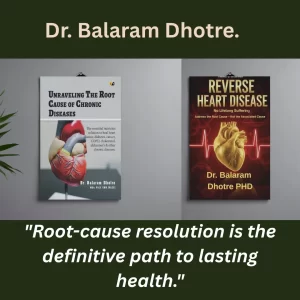
Written by Dr. Balaram Dhotre, PhD — Medicinal Chemistry (CDRI, Lucknow), with research experience across several pharmaceutical companies in India. His work focuses on explaining the nutrients the body requires, how the body uses them to function optimally, and how their deficiencies are related to chronic diseases. He is the Founder of Lypro-C and author of Unraveling The Root Cause of Chronic Diseases and Reverse Heart Disease: No Lifelong Suffering.
My Books
———————————————————————————————————————————-
Links on Amazon
Unraveling The Root Cause of Chronic Diseases:
Reverse Heart Disease: No Lifelong Suffering
———————————————————————————————————————————-