

What is pulmonary hypertension? Define briefly.
Pulmonary hypertension (PH) is a type of high blood pressure that specifically affects the arteries in the lungs (pulmonary arteries) and the right side of the heart.
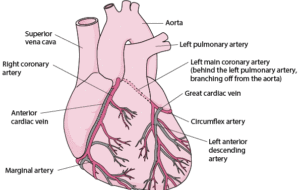
Essentially:
- The blood vessels in the lungs become narrowed, blocked, or damaged.
- This makes it much harder for blood to flow through the lungs.
- As a result, the pressure in these arteries rises (hypertension).
- The right side of the heart must work much harder to pump blood against this resistance, eventually leading to the heart muscle weakening and potentially causing heart failure
Are LDL & Lp(a) serum levels higher in patients suffering from pulmonary hypertension?
. Conversely, patients with certain types of PH often have higher levels of lipoprotein(a) (Lp(a)), which can indicate a worse prognosis.
- Chronic inflammation: The chronic inflammatory state associated with PH may reduce LDL-C levels, a phenomenon also observed in other chronic diseases like rheumatoid arthritis and cancer.
- Altered liver metabolism: Dysfunction of the liver, potentially due to right-sided heart failure caused by PH, could contribute to altered LDL-C levels.
- Poor prognosis: Ironically, low LDL-C levels in PAH patients have been linked to a significantly increased risk of death, suggesting that low LDL-C may not be protective in this specific patient population.
- Reversal of disease: In patients who undergo successful treatment for CTEPH, LDL-C levels have been observed to increase, returning toward normal levels as pulmonary hypertension resolves.
- Oxidized LDL: While overall LDL-C may be low, studies have found increased levels of oxidized LDL in the plasma and lungs of PH patients. This oxidized form is more inflammatory and can contribute to pulmonary vascular remodeling by promoting the proliferation of smooth muscle cells in the arteries.
- Chronic thromboembolic pulmonary hypertension (CTEPH): Patients with CTEPH, a disease caused by unresolved blood clots in the lungs, have been found to have significantly higher Lp(a) levels compared to healthy individuals and patients with primary PH. The structure of Lp(a) is similar to plasminogen, a clot-busting enzyme. The theory is that high levels of Lp(a) may interfere with the body’s natural ability to dissolve blood clots, leading to the organized thrombi that define CTEPH.
- Secondary pulmonary hypertension: In a separate study, Lp(a) levels were also found to be higher in patients with secondary pulmonary hypertension, such as those with Eisenmenger’s syndrome (a congenital heart defect causing PH), compared to controls.
- Primary pulmonary hypertension (PPH): Research has been mixed regarding Lp(a) levels in primary or idiopathic PH. One study found no significant difference in Lp(a) levels compared to controls, though the sample size was small. Another indicated that higher Lp(a) might be associated with a worse prognosis in severe PPH.
- Disease progression marker: Elevated Lp(a) is considered a potential marker of tissue damage and a factor that could contribute to the vascular changes seen in PH.
What are the symptoms of pulmonary hypertension?
Common symptoms of pulmonary hypertension include shortness of breath, fatigue, and dizziness, which can progress from occurring during exertion to happening at rest. Other signs include chest pain, swelling in the abdomen, legs, or ankles, and a bluish discoloration of the lips or skin (cyanosis)
Early and progressive symptoms
- Shortness of breath: This is often the first symptom, which may start with activities like climbing stairs and become more severe over time, affecting you even at rest.
- Fatigue and weakness: You may feel unusually tired and have less strength than normal.
- Dizziness or fainting: Episodes of lightheadedness or fainting can occur.
Later or more severe symptoms
- Chest pain or pressure: This can be mistaken for a heart attack.
- Swelling (edema): Fluid retention can cause swelling in the abdomen, legs, ankles, or feet.
- Bluish discoloration: A bluish tint to the lips and skin, known as cyanosis, can occur due to low oxygen levels.
- Fast or pounding heartbeat: You may experience palpitations or an irregular heartbeat.
- Nausea and lack of appetite: These can develop as the condition worsens and affect the right side of your heart.
- Dry cough or coughing up blood: A persistent cough or blood in your sputum can be a symptom.
What is the cause of pulmonary hypertension?
Pulmonary hypertension is caused by conditions that narrow, stiffen, or block the small blood vessels in the lungs, making it harder for blood to flow and increasing pressure in the pulmonary arteries. Key causes include left heart disease (most common), lung diseases like COPD, chronic blood clots in the lungs, and certain genetic and autoimmune conditions.
Key causes include left heart disease (most common), lung diseases like COPD, chronic blood clots in the lungs, and certain genetic and autoimmune conditions.
Common Causes
- Left-Sided Heart Disease: This is the most common cause, where the left side of the heart fails, resulting in blood backing up into the lungs and increasing pressure
- Lung Diseases: Conditions such as chronic obstructive pulmonary disease (COPD), emphysema, and pulmonary fibrosis can damage or narrow lung blood vessels.
- Chronic Blood Clots (Pulmonary Embolism): Long-term or repeated blood clots in the lung arteries can obstruct blood flow and cause high pressure.
- Sleep Apnea: Repeated breathing interruptions during sleep can lead to low oxygen levels and pulmonary hypertension.
Other Contributing Factors
- Genetic Factors: Inherited genetic mutations can increase the risk of pulmonary arterial hypertension (PAH).
- Autoimmune Diseases: Conditions like scleroderma and lupus can affect the lung vessels, leading to PH.
- Congenital Heart Defects: Birth defects in the heart can lead to pulmonary hypertension.
- Infections: HIV and other infections can be associated with certain types of pulmonary hypertension.
- Medications and Drugs: Certain drugs, including some appetite suppressants and illicit substances like methamphetamine, can cause PH.Other Medical Conditions: Liver diseases (like cirrhosis), metabolic disorders, and blood disorders can also contribute to pulmonary hypertension.
Idiopathic Pulmonary Hypertension
In many cases, a specific cause cannot be identified, and the condition is termed idiopathic pulmonary hypertension.
Vitamin C Deficiency and Pulmonary Hypertension
Vitamin C deficiency can cause pulmonary hypertension (PH) through mechanisms involving reduced nitric oxide and the activation of hypoxia-inducible transcription factors (HIF). This condition, sometimes called scurvy-induced pulmonary hypertension, is often reversible with vitamin C supplementation, making it important to consider in patients with unexplained or severe PH, especially those with poor nutritional status, a long smoking history, or other risk factors.
Vitamin Deficiency as the Cause of Pulmonary Hypertension
The article “Nutritional status in pulmonary arterial hypertension” (PAH) provides a comprehensive overview of micronutrient deficiencies in a cohort of PAH patients 1
The study confirmed previously known deficiencies and identified several other vitamin deficiencies
- Vitamin D: Confirmed deficiency as previously observed in PAH patients.3
- Vitamin B12: A functional deficiency was observed in 29% of patients, which was noted by a coinciding increase in methylmalonic acid (a marker for B12 functional status).4
- Vitamin K1: A low Vitamin K1 status was found in a majority of patients, specifically 60% of the cohort.5
The research also confirmed deficiencies in essential minerals, such as Iron and Selenium (found to be low in 40% of patients and associated with reduced vitality).6
In summary, while Vitamin D deficiency is a known issue, this study highlighted that clinically significant deficiencies in Vitamin B12 and Vitamin K1 are also common in PAH patients, suggesting that malnutrition or malabsorption in this population is more extensive than previously recognized.7
[https://pmc.ncbi.nlm.nih.gov/articles/PMC9768459/]
The article, “An easily overlooked cause of pulmonary arterial hypertension—thiamine deficiency,” highlights thiamine deficiency (TD), or Vitamin B1 deficiency, as a potential and often missed cause of Pulmonary Arterial Hypertension (PAH).
Here is a summary of the article’s key points regarding thiamine deficiency and PAH:
- Pathophysiology: Thiamine is a crucial coenzyme for the TCA cycle (Krebs cycle) and energy metabolism. TD impairs these metabolic pathways, blocking the conversion of pyruvate into acetyl-CoA. This leads to impaired ATP production and the accumulation of harmful intermediates like lactate and pyruvate, resulting in lactic acidosis.
- Cardiovascular Manifestation (Shoshin Beriberi): The most severe form of TD is Shoshin beriberi, characterized by high-output heart failure and lactic acidosis.
- TD causes peripheral vasodilation, leading to a reduction in systemic vascular resistance and a hyperdynamic circulation (high-output state).
- This state results in increased cardiac preload and impaired energy supply to myocardial cells, collectively triggering acute congestive heart failure, which often manifests predominantly as right-sided heart failure.
- Link to PAH: Increased pulmonary blood flow and elevated pulmonary capillary wedge pressure, resulting from the high-output state, are identified as mechanisms that contribute to Pulmonary Arterial Hypertension (PAH).
- Diagnosis and Overlooking:
- TD is often overlooked in critically ill patients due to its relative rarity and lack of specific symptoms.
- The “high-output, low-resistance” hemodynamic profile is a key feature of Shoshin beriberi.
- Diagnostic tools like right heart catheterization can confirm the high cardiac output state and PAH (mPAP 20 mmHg at rest). Echocardiography is the preferred initial screening method.
- Treatment and Prognosis: Minor studies and case reports suggest that thiamine supplementation may be beneficial for PAH patients linked to TD. Patients with acute circulatory failure from Shoshin beriberi can show significant clinical and hemodynamic improvement within hours of appropriate intravenous thiamine administration.
[An easily overlooked cause of pulmonary arterial hypertension—thiamine deficiency: https://www.frontiersin.org/journals/nutrition/articles/10.3389/fnut.2025.1633864/full]
The article presents a case study demonstrating that Vitamin C deficiency (scurvy) can be a readily reversible cause of Pulmonary Arterial Hypertension (PAH) and acute right-sided heart failure.
The core ability of Vitamin C to reverse the condition is based on its role in pulmonary vascular modulation:
- Case Outcome: A 45-year-old woman with PAH and acute right heart failure, whose condition was traced to non-detectable serum Vitamin C levels, rapidly improved following Vitamin C supplementation. Her severe PAH resolved, and she was discharged without needing any anti-pulmonary hypertensive medications. Follow-up echocardiogram confirmed normal right ventricular size and function with no signs of PAH.
- Mechanism of Reversal: Vitamin C’s reversal effect is linked to its crucial involvement in the nitric oxide (NO) pathway, which is the target of most approved PAH therapies. Vitamin C helps to increase NO concentration in the pulmonary endothelium, leading to vasodilation and decreased pulmonary vascular resistance through three main actions:
- Recycling the co-factor tetrahydrobiopterin for endothelial NO synthase (eNOS).
- Reducing the breakdown of arginine, the substrate for eNOS.
- Degrading an inhibitor of eNOS (asymmetric dimethyl L-arginine).
- HIF Degradation: Vitamin C is also involved in the degradation of Hypoxia-Inducible Factor (HIF). HIF activation is implicated in vascular remodeling and pulmonary vasoconstriction in PAH; therefore, Vitamin C’s role in breaking down HIF likely contributes to the reversal of the condition.
Conclusion: The case emphasizes that, despite its rarity, clinical scurvy can present as reversible PAH, and treatment with Vitamin C can lead to a dramatic improvement in hemodynamic profiles and pulmonary vascular resistance over a timeframe of hours to days.
Treatment of Pulmonary Hypertension
Are micronutrients the cause of chronic diseases?

References
- A Rare Case of Vitamin C Deficiency Causing Pulmonary Hypertension
M. Morin-Lavoie1, E. Blais2; 1Departement of respiratory medicine, Faculté de médecine et des
sciences de la santé, Sherbrooke, QC, Canada, 2CHUS, Sherbrooke, QC, Canada.
- Vitamin C Deficiency-Induced Pulmonary Arterial Hypertension: https://www.sciencedirect.com/science/article/abs/pii/S0012369219334658
- —————————————————————————————————————
About the Author
Written by Dr. Balaram Dhotre, PhD — Medicinal Chemistry (CDRI, Lucknow), with research experience across several pharmaceutical companies in India. His work focuses on explaining the nutrients the body requires, how the body uses them to function optimally, and how their deficiencies are related to chronic diseases. He is the Founder of Lypro-C and author of Unraveling The Root Cause of Chronic Diseases and Reverse Heart Disease: No Lifelong Suffering.
Click here to get your copy of:::::Reverse Heart Disease: No Lifelong Suffering on Amazon
————————————————————————————————————————————-
My Books

______________________________________________________________________________
Links on Amazon
Unraveling The Root Cause of Chronic Diseases:
Reverse Heart Disease: No Lifelong Suffering
===========================================================================