Introduction
What should you eat to actually repair your arteries? Dr. Balaram Dhotre explains the specific foods that supply vitamin C, lysine, and proline—the three building blocks of arterial healing—plus the supporting nutrients your cells need. A practical, patient‑friendly guide to eating for true heart disease reversal
In my previous articles, I explained that heart disease is not a cholesterol storage problem. It is a structural failure of the artery wall caused by a long‑standing deficiency of the nutrients your cells need to build and maintain strong collagen.
I told you that three nutrients are especially critical: vitamin C, lysine, and proline. Together with their supporting team of minerals and B‑vitamins, they give your arteries the raw materials to repair cracks, strengthen the vessel wall, and stop the cycle of plaque buildup.
But after reading that, you probably asked the most practical question of all: What do I actually eat?
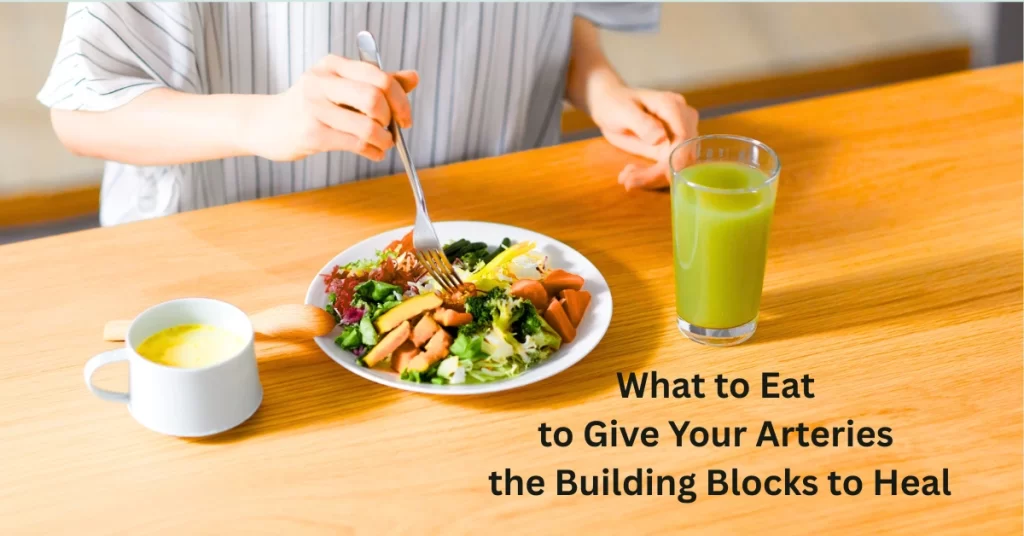
This article answers that question. I will walk you through the foods that supply each of the key repair nutrients, show you how to combine them into daily meals, and give you a simple framework for eating that focuses not on what you must eliminate, but on what your arteries desperately need.
The Shift: From Avoidance to Provision
Most heart disease diets hand you a list of forbidden foods: no oil, no butter, no eggs, no meat, no dairy. The message is clear—your disease is caused by what you ate, and the solution is to stop eating it.
I want you to make a different shift. Instead of asking “What must I remove?” start asking “What must I provide?”
Your arteries are living tissue. They are constantly repairing and rebuilding themselves. Every 30 days, your heart essentially reconstructs itself with brand‑new protein components. This renovation work requires a steady supply of specific building materials. If those materials are not present in your food, the renovation stalls. The artery remains weak. Disease continues.
So let us talk about what to provide.
Vitamin C: The Non‑Negotiable Foundation
Vitamin C is the master nutrient for arterial health. Without it, the enzymes that build collagen cannot function. The artery wall becomes fragile. Tiny cracks appear. The body patches them with sticky cholesterol—and the plaque begins.
You need vitamin C every single day. Your body does not store it. It must come from your diet or from supplementation.
Best Food Sources of Vitamin C
| Food | Vitamin C per 100g (approx.) | Notes |
| Amla (Indian gooseberry) | 450–600 mg | The richest natural source. One small amla provides more vitamin C than two oranges. |
| Guava | 200–230 mg | A single medium guava gives you over 200 mg. |
| Red bell pepper | 190 mg | Surprisingly rich—more than citrus. Eat them raw or lightly cooked. |
| Lemon | 50–80 mg | Easily added to warm water, salads, and meals. |
| Orange | 50 mg | A classic source. Whole fruit is better than juice. |
| Kiwi | 90 mg | Small but potent. |
| Broccoli (lightly cooked) | 65–90 mg | Also provides fibre and co‑factors. |
| Tomato | 20–30 mg | Common in Indian cooking; eat them fresh. |
| Fresh coriander leaves | 27 mg | A garnish that adds more than flavour. |
| Green chilli | 240 mg | Surprisingly high; use in moderation. |
Practical Tips for Vitamin C Intake
- Start your day with warm water and lemon, or eat one fresh amla.
- Include a guava or an orange as a mid‑morning snack.
- Add raw bell pepper, tomato, and fresh coriander to your lunch and dinner.
- Light cooking preserves vitamin C. Prolonged boiling destroys it. Steam or sauté vegetables briefly rather than pressure‑cooking them to death.
Important: The amounts of vitamin C needed for therapeutic reversal—that is, actually repairing years of arterial damage—often exceed what even a good diet can provide. This is why I included vitamin C in the Lypro‑C formula at doses aimed at tissue repair, not just deficiency prevention. Diet builds the foundation. Supplementation completes the therapeutic dose.
Lysine: The Amino Acid That Strengthens the Scaffolding
Lysine is an essential amino acid. Your body cannot manufacture it. It must arrive through food. In collagen, lysine forms the cross‑links that give the protein its strength. Without it, the collagen scaffolding remains loose and fragile.
Lysine also has a unique protective function. It can bind to the same sites on the artery wall where lipoprotein(a)—the sticky cholesterol band‑aid—tries to attach. By occupying those sites, lysine helps prevent new plaque from forming while your body repairs the existing damage.
Best Food Sources of Lysine
| Food | Lysine per 100g (approx.) | Notes |
| Eggs | 900–1000 mg | One of the most complete and accessible sources. |
| Paneer (cottage cheese) | 1300 mg | Excellent for vegetarians. |
| Fish (pomfret, rohu, mackerel) | 1600–1800 mg | Also provides omega‑3 fatty acids. |
| Chicken (lean) | 1700–2000 mg | High‑quality, concentrated protein. |
| Milk (whole) | 270 mg per cup | A daily glass contributes meaningfully. |
| Yoghurt | 300–350 mg per cup | Also supports gut health. |
| Lentils (masoor, toor dal) | 600–700 mg (cooked) | Good plant source, though less dense than animal foods. |
| Chickpeas (chana) | 600 mg (cooked) | Combine with grains for a fuller amino acid profile. |
| Quinoa | 240 mg (cooked) | A rare plant source with a balanced amino acid profile. |
| Soybean | 1100 mg (cooked) | Use whole soybean or tofu. |
| Pumpkin seeds | 360 mg (30g handful) | Easy to add to salads and snacks. |
Practical Tips for Lysine Intake
- If you eat eggs, two eggs at breakfast provide a substantial lysine base.
- If you are vegetarian, include paneer, dal, and yoghurt daily.
- Combine lentils with rice or roti to improve the amino acid balance.
- Snack on roasted chana or a handful of pumpkin seeds.
For those who follow a strict plant‑based diet, achieving therapeutic levels of lysine can be challenging without very deliberate planning. This is one reason I do not insist on a single dietary philosophy. The goal is to provide the nutrients, from whichever high‑quality sources align with your values and your body’s needs.
Proline: The Partner Amino Acid for Collagen Stability
Proline works alongside lysine to form the collagen triple helix. It is the second most abundant amino acid in collagen. While your body can make some proline on its own, periods of active tissue repair—exactly what heart disease reversal demands—often require more than the body can produce.
Best Food Sources of Proline
| Food | Proline per 100g (approx.) | Notes |
| Eggs | 500–600 mg | Egg whites are particularly rich. |
| Dairy (milk, paneer, cheese) | 800–1100 mg | Excellent vegetarian sources. |
| Fish | 800–1000 mg | Marine sources are well‑supplied. |
| Chicken | 900–1200 mg | Also rich in lysine—a dual benefit. |
| Bone broth | Variable (high) | Traditional healing food; rich in collagen precursors. |
| Soybean | 500–600 mg | A good plant option. |
| Wheat germ | 400–500 mg | Can be sprinkled on roti dough or porridge. |
| Asparagus | 100–120 mg | A vegetable source, though much less concentrated. |
| Mushrooms | 80–100 mg | Modest but adds variety. |
Practical Tips for Proline Intake
- Eggs and dairy provide both lysine and proline in one package—highly efficient.
- If you eat non‑vegetarian food, fish and chicken are excellent sources.
- Bone broth, a traditional remedy in many cultures, is naturally rich in collagen‑building amino acids.
- Vegetarians should combine dairy, legumes, and wheat germ consistently.
The Supporting Team: Nutrients That Make Repair Possible
Vitamin C, lysine, and proline do not work alone. They need a full team of co‑factors. Think of these as the tools and workers that turn the raw materials into a finished structure.
Magnesium
Magnesium is required for over 300 enzymatic reactions, including every step of energy production. Without magnesium, your cells lack the fuel to carry out repairs.
- Sources: Green leafy vegetables (spinach, methi), pumpkin seeds, almonds, cashews, bananas, whole grains, dark chocolate.
Zinc
Zinc is essential for cell division and new tissue formation. When your artery wall needs to grow new cells to replace damaged ones, zinc is mandatory.
- Sources: Pumpkin seeds, sesame seeds, chickpeas, cashews, eggs, fish.
Copper
Copper helps cross‑link collagen and elastin fibres, giving the artery its flexibility. Without copper, the collagen you build will be weaker.
- Sources: Sesame seeds, cashews, mushrooms, sunflower seeds, whole lentils, dark chocolate.
B‑Complex Vitamins
The B‑vitamins act as coenzymes in energy production. They are the spark plugs that allow your cells to convert glucose and fatty acids into usable energy. Every repair process runs on that energy.
- Sources: Whole grains, eggs, dairy, green leafy vegetables, legumes, nuts.
Omega‑3 Fatty Acids
Omega‑3s help regulate inflammation and support endothelial health. They do not build collagen, but they create a favourable environment for repair.
- Sources: Fatty fish (mackerel, sardines), flaxseeds, chia seeds, walnuts.
A Day on the Essential Nutrient Diet: What It Looks Like
Here is a simple, Indian‑friendly example of a day of eating designed to supply your arteries with everything they need. This is not a rigid prescription. It is a template. Adjust it to your taste, your region, and your dietary preferences.
Morning (on waking)
- 1 glass warm water with half a lemon.
- 1 fresh amla (or amla powder in water if fresh is unavailable).
Breakfast
- 2 boiled eggs or a paneer bhurji (100g paneer scrambled with onion, tomato, turmeric).
- 1 slice whole‑grain toast or 1 small multigrain roti.
- A small bowl of fresh guava or papaya.
Mid‑morning
- A handful of pumpkin seeds and almonds (soaked overnight).
- 1 glass of buttermilk (chaas) with a pinch of roasted cumin powder.
Lunch
- 1 bowl masoor dal (red lentils) with a squeeze of lemon.
- 1 bowl cooked green leafy vegetable (spinach or methi, lightly sautéed in a few drops of ghee or mustard oil).
- 1 bowl sliced tomato, cucumber, and fresh coriander salad with a pinch of salt and black pepper.
- 2 multigrain rotis or 1 bowl brown rice.
- A small bowl of plain yoghurt.
Evening snack
- Roasted chana (chickpeas) with a sprinkle of turmeric and black salt.
- 1 cup green tea.
Dinner
- Grilled fish (100–150g) or a bowl of chana curry (chickpeas cooked with onion, tomato, ginger, garlic, and minimal oil).
- 1 bowl lightly steamed broccoli and carrots.
- 1 bowl vegetable soup with coriander.
- 1 multigrain roti.
Before bed
- 1 glass warm milk with a pinch of turmeric or cinnamon (if you tolerate dairy).
What to Minimise
I do not give long lists of forbidden foods. But I do urge you to minimise one category: empty‑calorie foods.
These are foods that provide fuel (calories) without the micronutrients needed to metabolise that fuel. When you eat them, your body must use its own stored vitamins and minerals to process them. Over time, this depletes your reserves and worsens the very deficiencies that caused your disease.
Empty‑calorie foods include:
- Sugar and sugary drinks.
- White flour products (white bread, naan made from maida, biscuits, cakes).
- Polished white rice (switch to brown or hand‑pounded rice).
- Deep‑fried packaged snacks.
- Processed foods with long ingredient lists.
Every time you replace an empty‑calorie food with a nutrient‑dense one, you make a deposit into your body’s repair account.
A Note on Supplementation
A nutrient‑dense diet is the foundation. But if you already have established heart disease, diet alone may not be enough to reverse years of accumulated damage. Therapeutic reversal often requires nutrient doses that are difficult to achieve through food alone.
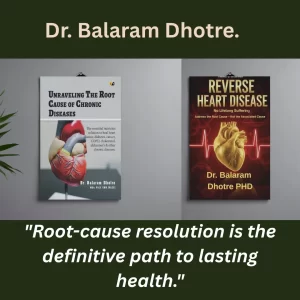
This is why I developed the Lypro‑C formula—to provide vitamin C, lysine, and proline in therapeutic amounts, along with supporting co‑factors, in a single daily protocol. You can learn more about this in my book Reverse Heart Disease: No Lifelong Suffering, where I explain the full rationale, the specific nutrients, and the exact protocol I used myself.
The Simple Rule to Remember
If you take away only one idea from this article, let it be this: Every meal is an opportunity to give your arteries the building blocks they need to heal.
Do not ask whether a food is allowed or forbidden. Ask whether it supplies the nutrients your cells are waiting for. Does this meal provide vitamin C? Does it contain lysine and proline? Does it deliver magnesium, zinc, and the B‑vitamins? If the answer is yes, you are moving in the right direction.
Your arteries are living tissue. They are designed to repair themselves. They have simply been starved of the raw materials for too long. Stop starving them. Feed them, every day, and they will heal.
The power to reverse heart disease is not in the foods you remove. It is in the foods you finally choose to add.
Written by Dr. Balaram Dhotre, PhD — Medicinal Chemistry (CDRI, Lucknow), with research experience across several pharmaceutical companies in India. His work focuses on explaining the nutrients the body requires, how the body uses them to function optimally, and how their deficiencies are related to chronic diseases. He is the Founder of Lypro-C and author of Unraveling The Root Cause of Chronic Diseases and Reverse Heart Disease: No Lifelong Suffering.
Click here to get your copy of:::::Reverse Heart Disease: No Lifelong Suffering on Amazon
Visit lyproc.com to read more articles and learn about the root‑cause approach to chronic disease reversal.
My Books
Links on Amazon:
Unraveling the Root Cause of Chronic Diseases:
Reverse Heart Disease: No Lifelong Suffering:
—————————————————————————————————————————-
Suggested to Read
Article 1: The Real Root Cause of Heart Disease: https://lyproc.com/the-real-root-cause-of-heart-disease/
Article 2: Why Your Arteries Need Vitamin C, Lysine, and Proline—Not Just Less Oil: https://lyproc.com/artery-repair-nutrients/
Article 3: The 3 Missing Nutrients That Most Heart Disease Reversal Diets Overlook https://lyproc.com/missing-nutrients-heart-disease/
Article 4: Dr. Dhotre’s Root‑Cause Solution for Heart Disease: Treating the Cell, Not Just the Diet”
https://lyproc.com/dr-dhotre-root-cause-solution-for-heart-disease/